
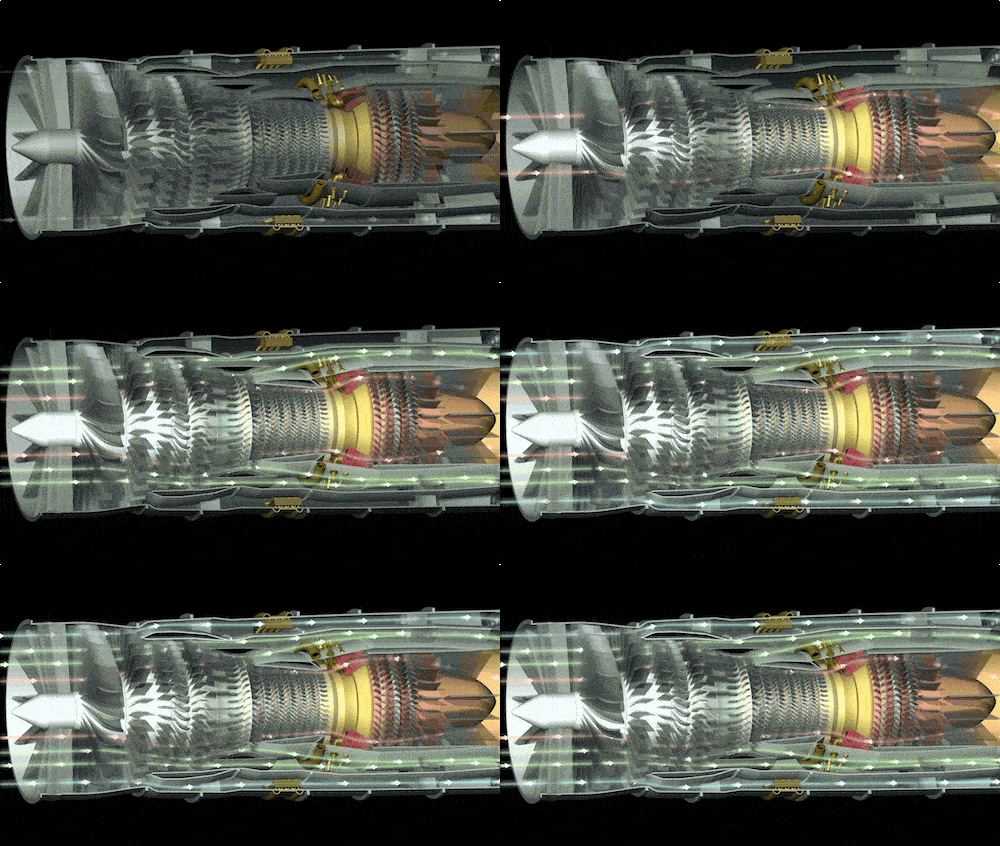

Jijau: Adaptive Jet Engine Architecture
Next-generation propulsion for high-speed, long-range, and stealth platforms.
What is an Adaptive Engine?
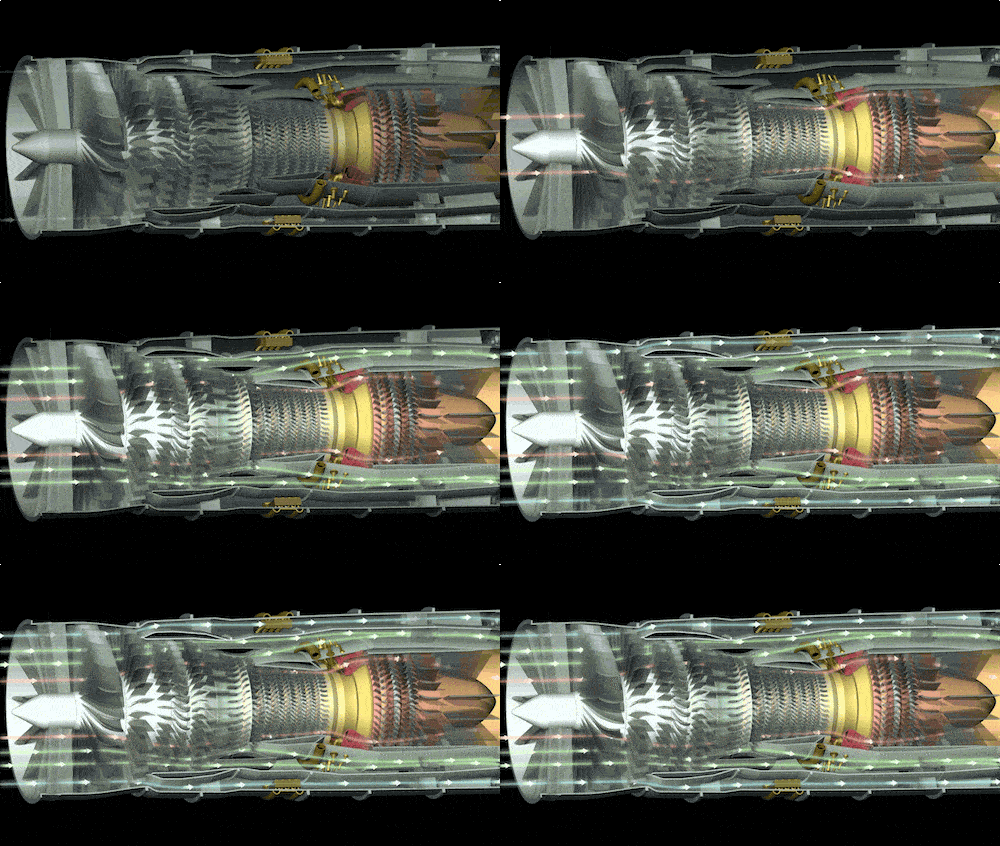
Traditional jet engines operate with fixed bypass ratios. Jijau introduces a breakthrough: an adaptive bypass system that intelligently adjusts the airflow split between core and bypass ducts based on mission needs—offering unmatched versatility between combat power and cruise efficiency.
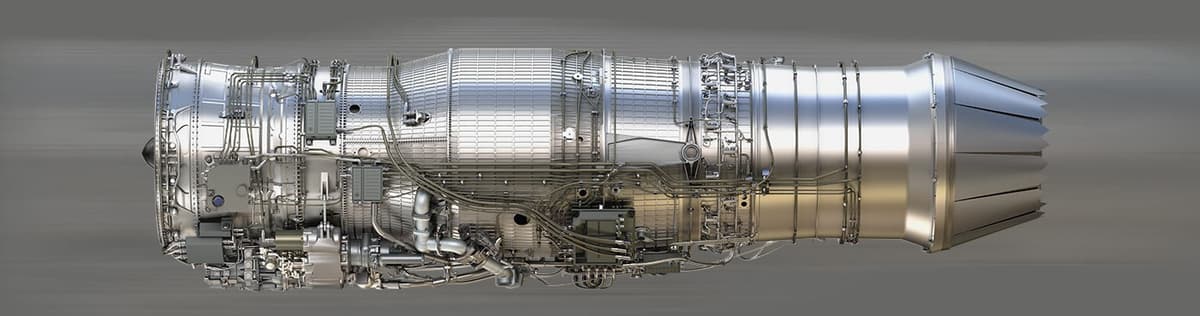
Figure: Simplified adaptive bypass airflow control mechanism.
Key Features
- 🧠 AI-Controlled Variable Bypass Ducting: Real-time modulation of bypass ratio for mission-optimized thrust and efficiency.
- 🔥 High-Temp Core with Advanced Alloys: Core temperatures beyond 1800K using custom nickel-based alloys and coated blades.
- 🧊 Integrated Thermal Management: Adaptive nozzle + embedded cooling loops for infrared signature control.
- ✈️ Supercruise Capability: Efficient dry thrust for sustained supersonic flight.
- 📦 Compact Modular Design: For integration into twin-engine or single-engine platforms with reduced radar cross-section.
Development Philosophy
Jijau is being built on an iterative, digital-first development model:
- Digital Twin Simulation: Complete thermodynamic cycle modeling, CFD flow paths, and turbine dynamics.
- Subscale Prototype Testing: Multi-stage core demonstrator built and tested in high-altitude facility.
- Material Innovation: In-house metallurgy R&D for high-stress rotating components.
- Control Intelligence: Embedded software developed with secure, real-time adaptive logic.
Engine Preview & Renderings
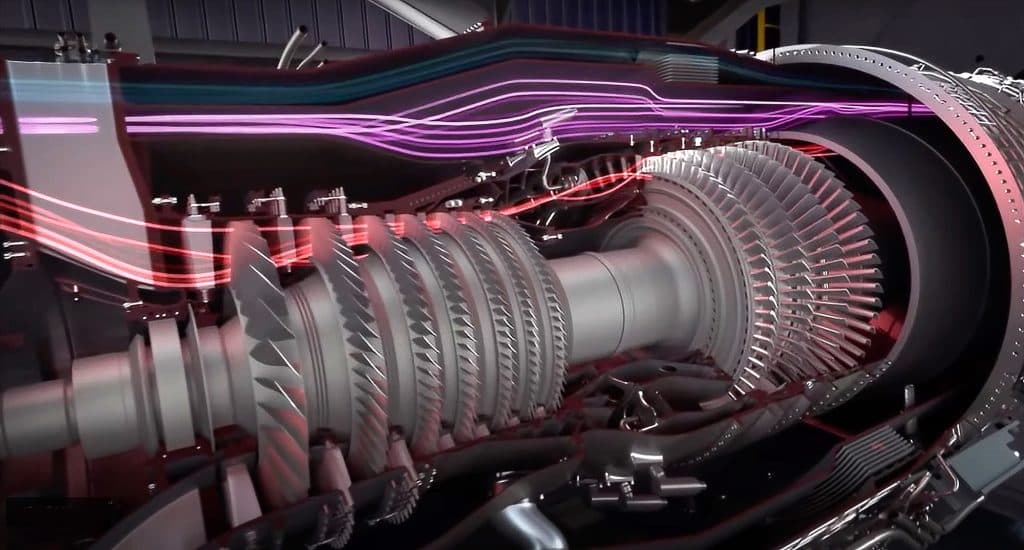
3D rendered cutaway showing modular core and bypass system (illustrative).
Animation: Adaptive airflow modulation in real time.
Strategic Applications
Jijau is designed for next-gen manned and unmanned aircraft requiring a single propulsion solution to fulfill diverse mission needs:
- Interceptor-class fighters with extended loiter time
- Stealth UAVs requiring low IR signature
- Future VTOL and hybrid-propulsion platforms
🔱 “Jijau”: A Tribute to Self-Reliance and Civilizational Values
The name “Jijau” (जिजाऊ), given to our advanced adaptive aero engine, is far more than a label — it is a declaration of intent, a tribute to legacy, and a symbol of India's path to technological sovereignty. It honors Rajmata Jijabai, the revered mother of Chhatrapati Shivaji Maharaj, whose teachings and values shaped one of India's greatest visionaries and nation-builders.
🛡️ Why “Jijau”?
- Inspiration from the Mother of a King: Jijabai was not just a queen mother — she was a mentor, philosopher, and moral guide who nurtured the spirit of self-rule (Swaraj) in her son. Through “Jijau,” we draw inspiration from her legacy to build India's engine of future sovereignty.
- Values Meet Engineering: Just as Jijabai instilled in Shivaji the ideals of Dharma, resilience, and national pride, our engine development embodies first-principles thinking, ethical innovation, and a resolve to build from within — true to the spirit of Swaraj and Sanskar.
- Indian Technology, Indian Values: “Jijau” reflects our belief that advanced technology must not only be efficient and precise, but also rooted in cultural integrity and a sense of duty toward the nation.
- Symbol of Indigenous Strength: In naming our engine “Jijau,” we assert that India need not depend on imported propulsion systems. With clarity of vision, technical excellence, and a value-driven approach — just as Jijabai stood strong amidst adversity — we are determined to power India's skies from Indian soil.
Our Commitment
“As Jijau shaped Shivaji into the father of Swaraj, so shall this engine become the foundation of India's self-reliant defense future.”
🛠️ Project Overview: Indigenous Supersonic Turbofan Engine
Our program aims to develop a single-shaft, geared low-bypass ratio turbofan engine, optimized for supersonic fighter/interceptor applications and future unmanned platforms. This effort blends indigenous innovation with domain expertise and state-of-the-art digital twin technologies.
🚀 Key Features:
- Advanced digital twin systems and component-level simulation (TRL 6 achieved)
- Indigenous FADEC and sensor integration
- Modular core for adaptability across variants (afterburning / non-afterburning)
- In-house testbeds and validation aligned with military standards
👨🔬 Team & Cost Efficiency
A committed team of domain experts from Rolls-Royce, GTRE, ISRO, and leading Indian private firms are building this sovereign powerplant solution. The target is a lifecycle cost of ~$6–8M per unit and a 30% shorter development timeline than global benchmarks.
📌 Strategic Alignment
- 🇮🇳 Aatmanirbhar Bharat Abhiyan
- 📜 Defence Production and Export Promotion Policy (DPEPP) 2020
- 🧭 DRDO's Technology Perspective and Capability Roadmap
🎯 Target Applications
This engine is being developed for next-gen platforms like:
- AMCA (Advanced Medium Combat Aircraft)
- TEDBF (Twin Engine Deck Based Fighter)
- High-performance UAVs
- Attritable air combat platforms