


Engine Testing Rig – Performance, Safety & Data Systems
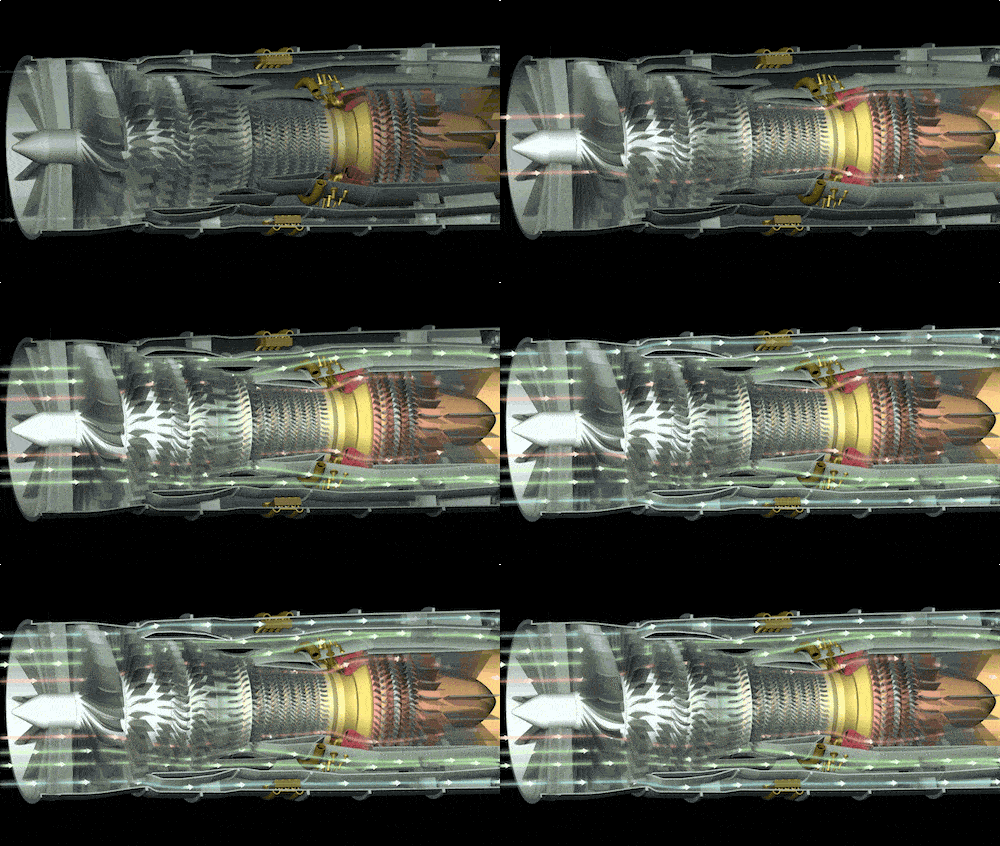
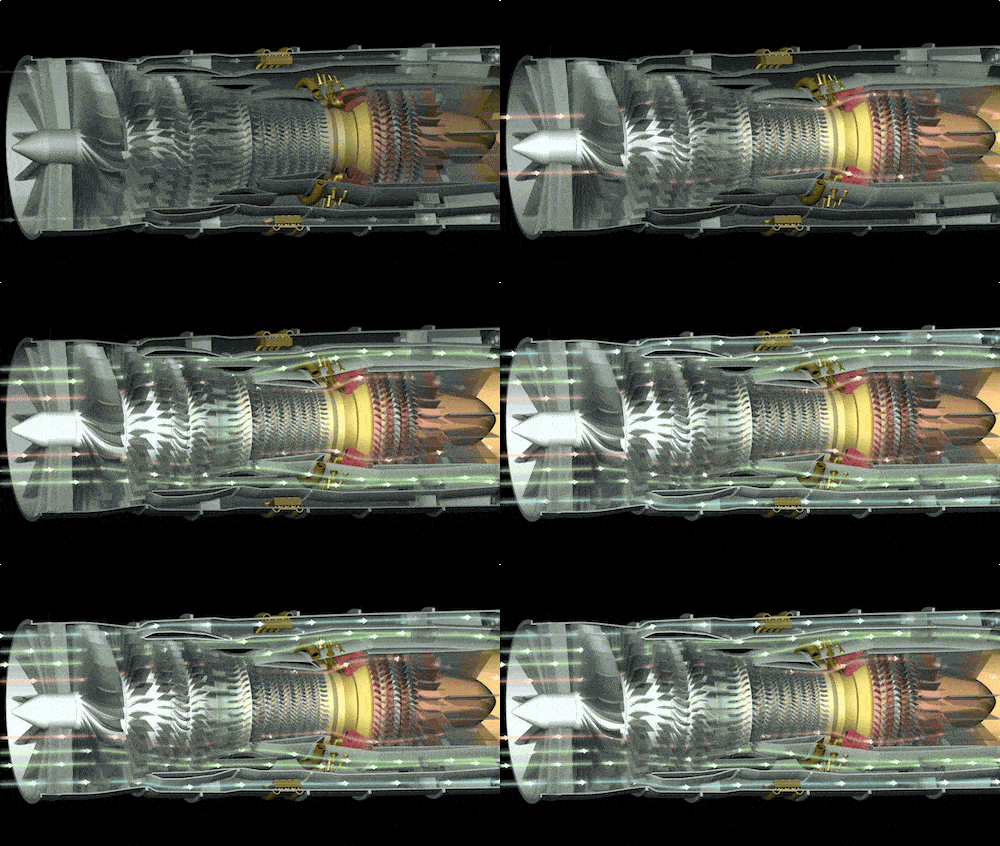
Our full-thrust testing rig replicates in-flight thermal, mechanical, and aerodynamic loads experienced by next-gen combat jet engines. Below is a breakdown of its technical capabilities and safety architecture.
🚀 High-Thrust Capacity
Supports full-scale testing of jet engines up to 150 kN thrust class, including afterburning turbofans.
🚀 Thrust Measurement
Precision load cells integrated into mounting pylons for real-time axial thrust data acquisition with <1% error margin.
🚀 Vibration & Modal Monitoring
Accelerometers and proximity probes distributed across engine mounts, casing, and rotors to monitor imbalance and resonance.
🚀 Fuel Flow & Pressure Tracking
High-accuracy mass flow meters and pressure transducers across fuel delivery paths to ensure steady combustion under all loads.
🚀 Thermal Profiling
Thermocouples and infrared sensors measure turbine inlet, combustor, and exhaust gas temperatures across radial and axial zones.
🚀 Afterburner Monitoring
Dedicated flame sensors, oxygen sensors, and photodiodes ensure stable ignition, propagation, and exit conditions.
🚀 Noise Suppression & Containment
Aeroacoustic shrouds, deflector baffles, and reinforced barriers minimize noise emission and mitigate engine burst risk.
🚀 Data Logging & Telemetry
Real-time telemetry with fiber-optic networks and redundant storage nodes. Supports sampling up to 50 kHz per channel.
🚀 Emergency Shutdown Systems
Integrated quick-stop hydraulic dampers, fire suppression, fuel dump valves, and blast-resistant enclosures.
🚀 Remote Operation & Safety Interlocks
All tests controlled from isolated control room with E-stop triggers, biometric access, and interlock override systems.