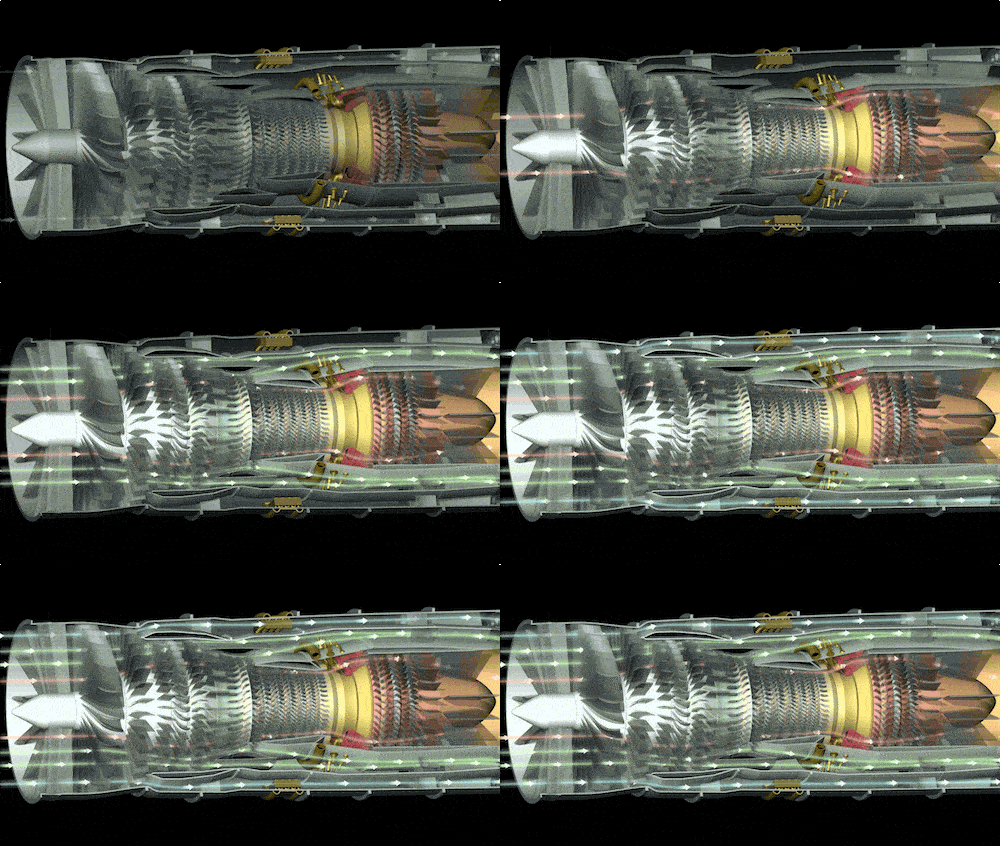

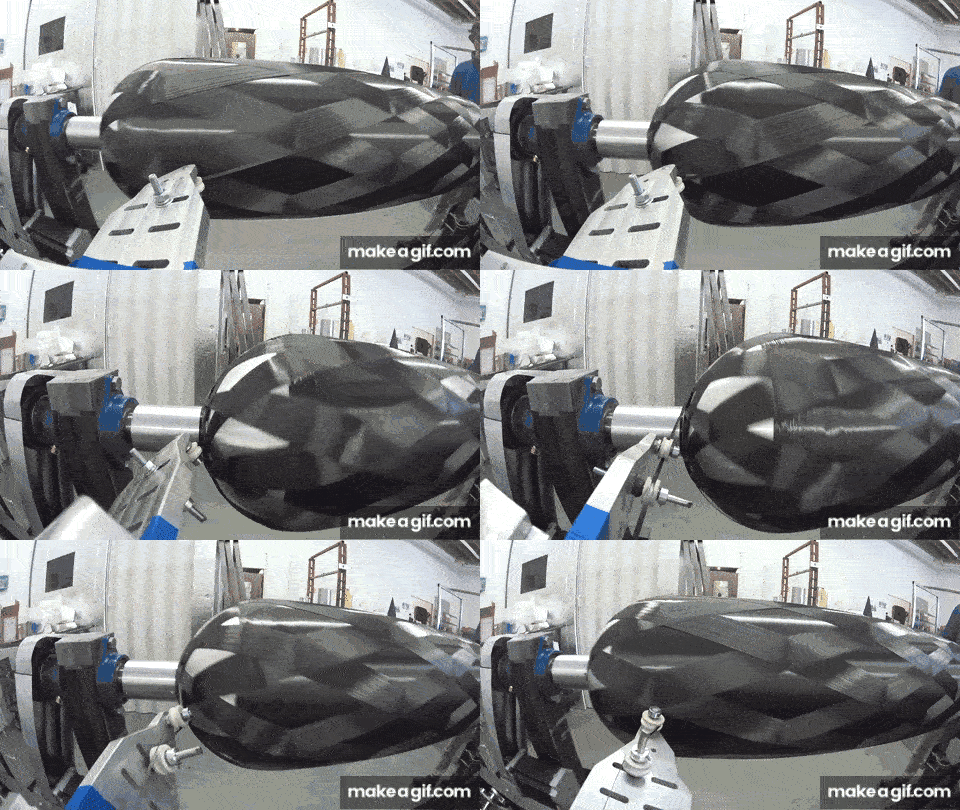

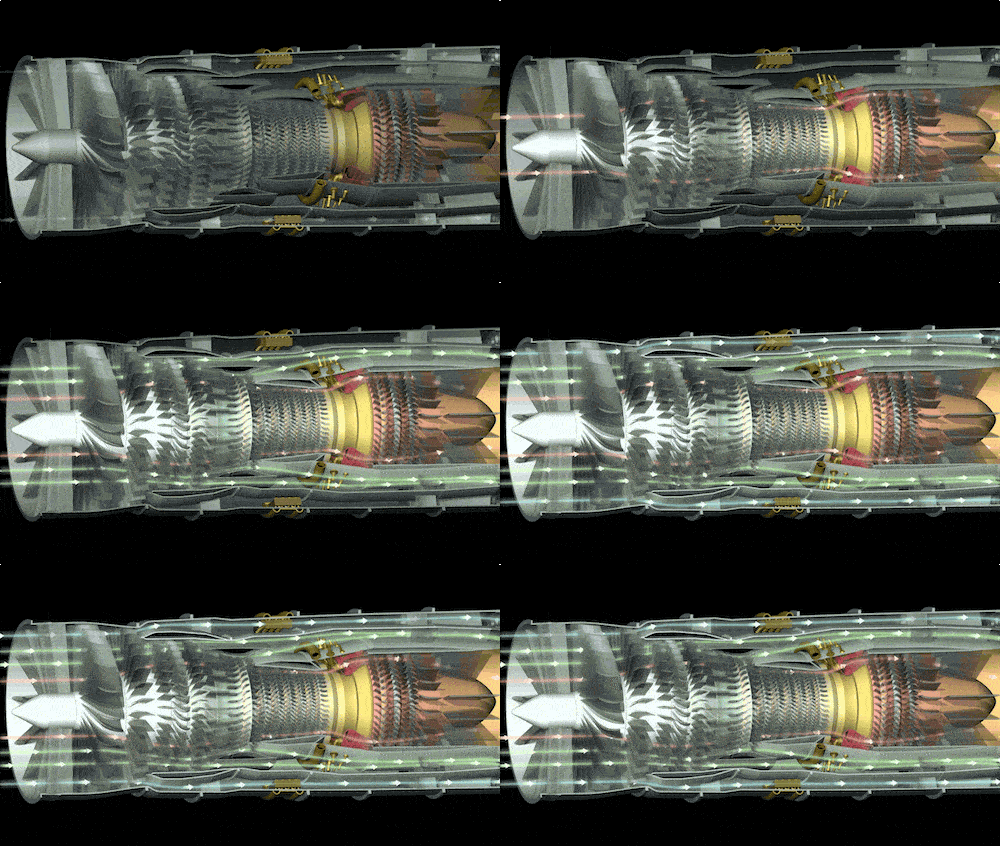

RAGAM Cryogenic Engine
Reusable Agile Gas Arching MethaLOX engine delivering high-efficiency staged combustion thrust for orbital-class vehicles.
Overview
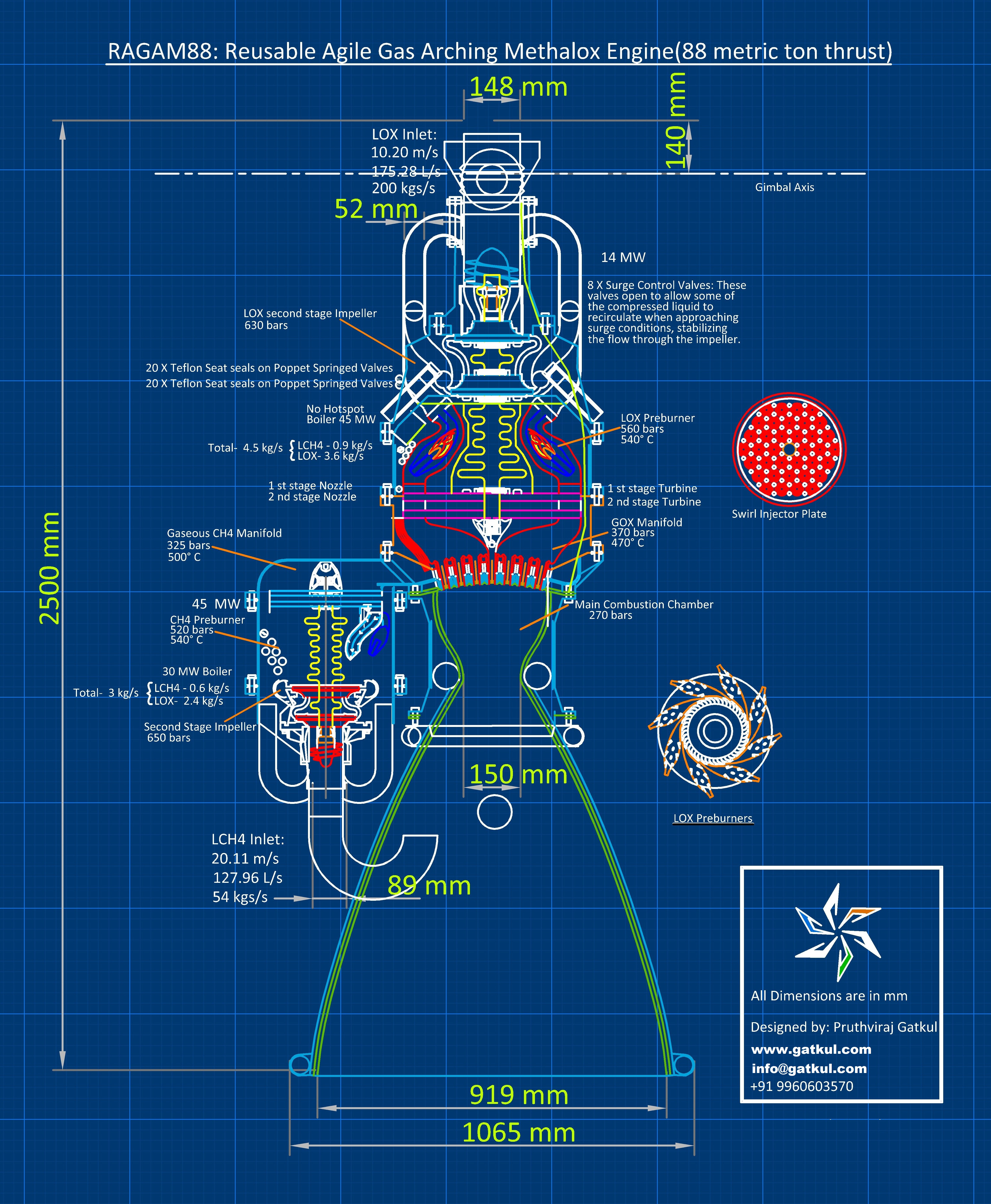
RAGAM is a next-generation cryogenic engine developed to meet the evolving demands of orbital and deep-space missions. Fueled by liquefied methane and liquid oxygen, it uses a staged combustion cycle to achieve high thrust-to-weight ratio and exceptional reusability. The engine is designed for modular integration across launch vehicles from small-lift to super-heavy configurations.
- 🔁 Reusability optimized for >20 flight cycles
- 🧊 Operates on ultra-cold MethaLOX propellants
- ⚙️ Closed-cycle staged combustion for high efficiency
- 🎯 Engine gimbal capability for vectoring and control
Engine Visualizations
Simulation: Controlled hot-fire visualization during ignition sequence.
Technical Highlights
Thrust Class
88 tons (vacuum), 75 tons (sea level) class
Chamber & Nozzle
Regeneratively cooled copper-alloy chamber with high-expansion cryogenic nozzle
Cycle
Full-flow staged combustion cycle with methane-rich preburner
Reusability
Designed for 20+ reuse cycles with minimal refurb time
Vectoring
Dual-axis hydraulic gimbal system ±6° for flight control
Applications
Primary propulsion for reusable boosters, upper stages, and lunar transfer modules
Material & Cooling Innovation
RAGAM leverages high-temperature nickel alloys and Monel-class supermetals in its chamber and turbopump housing, optimized for sustained operation under cryogenic and high-pressure oxygen environments. Regenerative cooling paths are intricately cast and 3D printed to maximize wall longevity while preventing hot-spot formation during long burns.
Development Roadmap
- Phase 1: CFD, CFX and combustion modeling with flow path simulation
- Phase 2: Sub-scale component testing (injectors, turbopump blades)
- Phase 3: Full-scale hotfire tests with reusability benchmarks
- Phase 4: Launch integration and in-flight testing