

PADMA
Precision Advanced Deep-space Mission Architecture — 30-ton class reusable human-rated launcher engineered for Earth-Moon logistics and LEO infrastructure.
Mission Statement
PADMA is not just a launch vehicle — it’s a mission architecture built for tomorrow’s space economy. Designed to carry crew, cargo, and propellant to LEO and beyond, PADMA bridges Earth and lunar domains, enabling human expansion into deep space.
System Highlights
- 📦 Payload: Up to 30 tons to Low Earth Orbit
- ♻️ Reusable: Stage 1 and Stage 3 are fully reusable
- 🌐 Dual-Utility Stage 2: Designed for repurposing in orbital station infrastructure
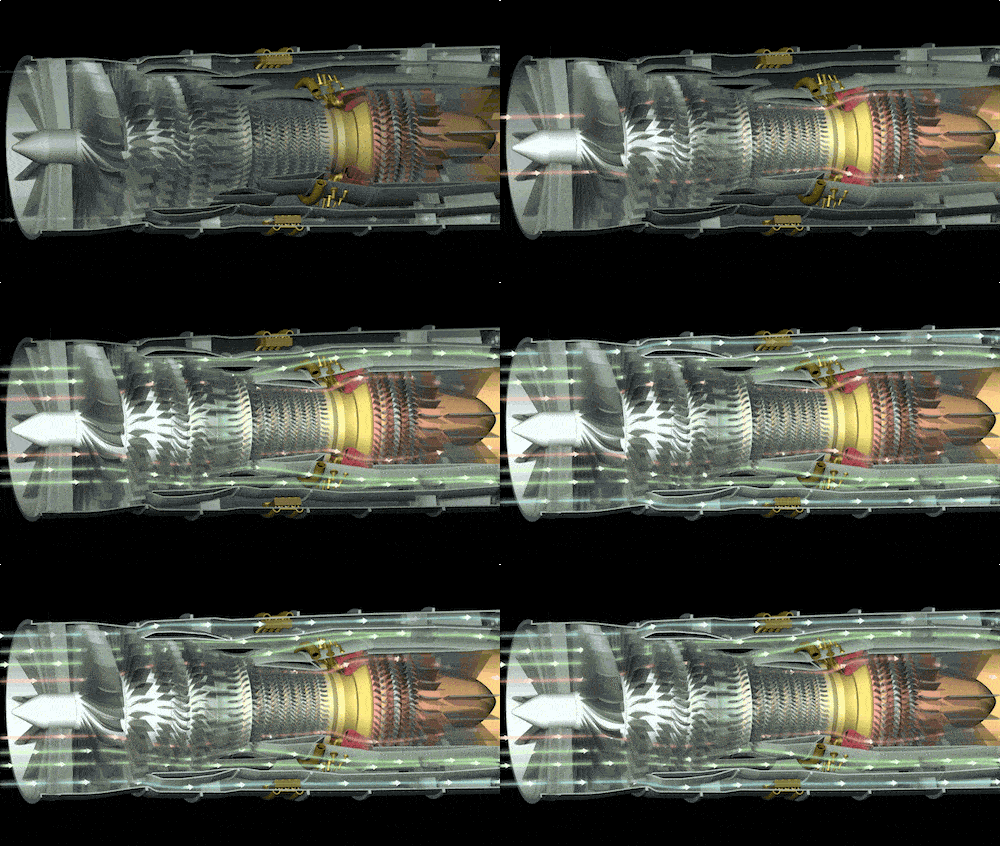
- 🚀 Engines: RAGAM MethaLOX (1st stage), Vacuum HydroLOX (upper stages)
- 👨🚀 Human-Rated: Capsule systems and avionics with triple-fault tolerance
- 🌕 Lunar Logistics: Configured for cargo and crew transport to Moon
- 🔁 Orbital Refueling Ready: Future missions support in-space propellant transfer
Vehicle Architecture

PADMA full configuration with crew capsule

Stage 1 reusability animation — descending after boostback

Stage 2 transformed into structural module for private LEO stations
Simulated Mission Overview — Launch, Stage Reuse, Lunar Extension
Stage Design Overview
Stage 1: Reusable Booster
- Engine: 88-ton class RAGAM (Methane + LOX)
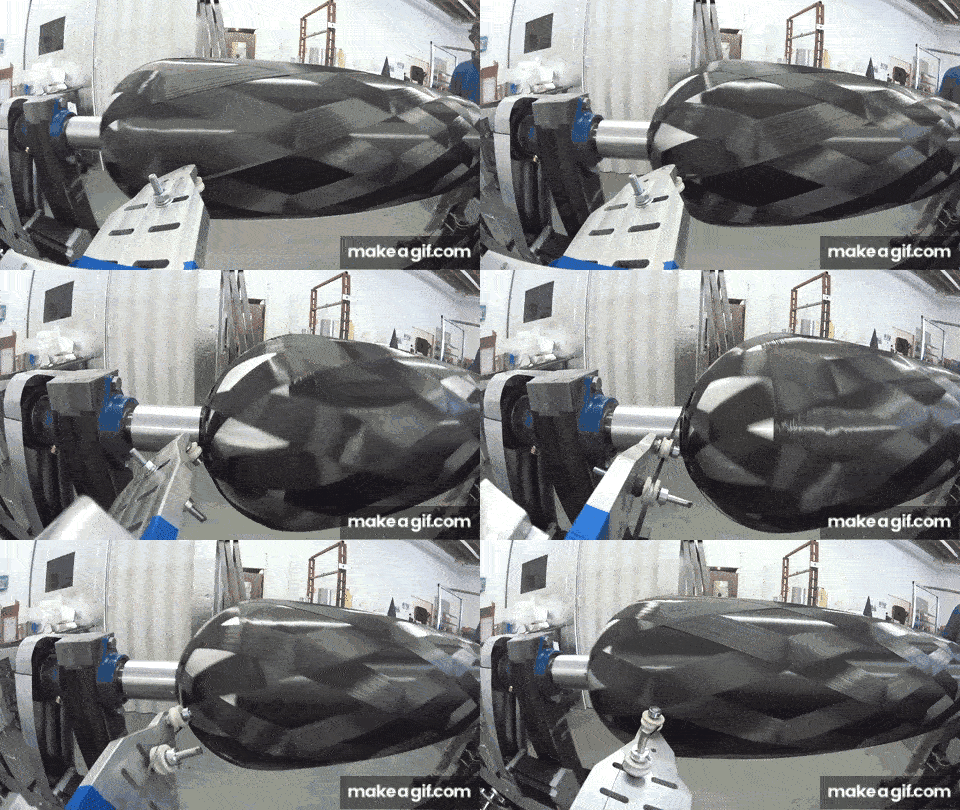
- Structure: Composite + Metallic hybrid
- Recovery: Vertical descent, retro-propulsion, foldable legs
Stage 2: Orbital Habitat Stage
- Engine: Vacuum-optimized HydroLOX
- Material: Modular alloy shell with micrometeorite protection
- Unique Feature: Post-mission modular repurposing into private orbital platforms
Stage 3: Returnable Crew/Service Segment
- Engine: HydroLOX reentry engine cluster
- Features: Human-rated, radiation shielded, regenerative cooled heat shields
- Docking: Compatible with orbital fuel depots and lunar landers
Earth–Moon Connectivity
PADMA is optimized for round-trip lunar logistics. With cryogenic insulation, structural adaptability, and in-orbit propellant transfer capability, it is a cornerstone for supporting Moon bases — whether for cargo drop-offs, resupply, or eventual human return legs.
Orbital Infrastructure Contribution
Unlike traditional stages discarded after use, PADMA’s second stage can become a structural module for orbital stations. This eliminates waste, supports space tourism and habitation, and actively reduces debris — transforming every mission into lasting infrastructure.
Applications
- 👩🚀 Manned missions to LEO and lunar orbit
- 🔧 Orbital infrastructure deployment and upgrades
- 🚢 Propellant depot setup and refueling missions
- 🛰️ Private station servicing and module deployment
- 🌕 Lunar cargo and lander staging missions
Development Milestones
- Q1: Orbital tank pressurization and propellant boiloff trials
- Q2: Full stage repurpose test in microgravity
- Q3: Earth-Moon demo with partial refuel
- Q4: PADMA-A1 launch with first habitat-ready stage 2